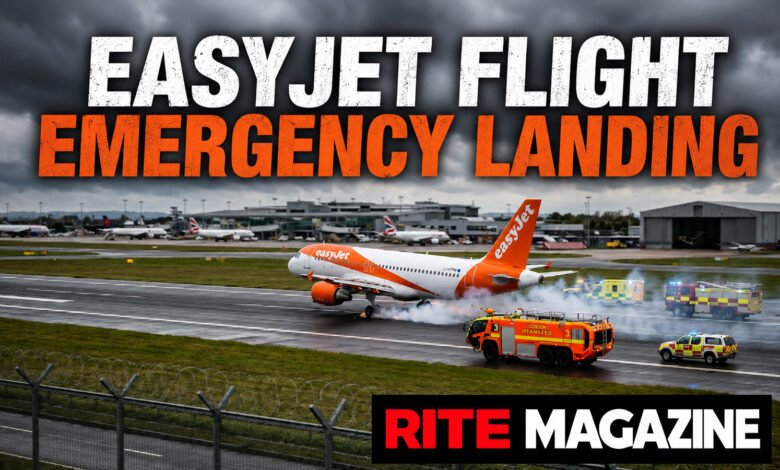
Flying can feel scary sometimes, even on a normal day. But what happens when something goes seriously wrong at 36,000 feet in the air? That is exactly what passengers on an EasyJet flight experienced on February 8, 2025. A routine holiday flight turned into one of the most stressful moments of their lives. The good news is that everyone landed safely. In this article, we will walk you through exactly what happened, why the plane had to divert, and what it all means for air travel safety.
What Flight Was This?
The flight in question was EasyJet flight EZY2252 (also written as U2-2252). It departed from Hurghada International Airport in Egypt and was heading to Manchester Airport in the United Kingdom. The aircraft was an Airbus A320-200N, registration G-UZEE, which is a modern, widely used passenger jet operated by many airlines around the world.
Everything started normally. Passengers had boarded, bags were stored, and the flight took off on schedule. People settled in for the roughly five-hour journey back to England after what was, for many, a relaxing holiday in Egypt.
When Did the Emergency Begin?
About one to two hours into the flight, something unexpected happened. Cabin crew members, who had been serving drinks to passengers, suddenly stopped what they were doing and rushed to the front of the plane. This caught passengers’ attention right away.
An urgent announcement was made asking if anyone on board had medical training. At first, many passengers assumed a fellow traveler had fallen ill. That kind of thing, while worrying, does happen on flights from time to time. But then came the announcement that changed everything.
The crew informed passengers that the person who had collapsed was not a passenger. It was the captain of the aircraft.
How Did Passengers React?
As you can imagine, people were frightened. One passenger, speaking anonymously to the Manchester Evening News, said they became very worried once they found out it was the pilot who was unwell. “At this point the passengers were starting to get rather worried and anxious, including myself, knowing that it was a pilot and not a passenger,” they said.
Another traveler described the descent into Athens as rough and scary, and said they could see emergency vehicles lining up along the runway as the plane approached. One passenger even had a panic attack and needed an oxygen mask from the crew. It was an incredibly tense situation for everyone on board.
What Did the Co-Pilot Do?
This is where the story shows the true value of aviation training and safety systems. While the captain was receiving emergency medical help inside the aircraft, the First Officer (co-pilot) took full control of the plane. Commercial aircraft always carry two qualified pilots for exactly this kind of situation.
The First Officer assessed the situation and made a clear, professional decision to divert the flight to Athens International Airport in Greece. At the time, the aircraft was flying at an altitude of approximately 36,000 feet and was about 110 nautical miles south-southeast of Athens. The diversion was the safest and most logical choice given the location of the aircraft.
The plane circled Athens Airport before being cleared to land. It touched down safely on runway 03L, about two hours and thirty-nine minutes after leaving Egypt. Waiting on the ground were fire engines, police cars, and ambulances, all lined along the runway. The captain was immediately attended to by paramedics upon landing.
Passengers praised the co-pilot and the rest of the cabin crew for how they handled the situation with calm and professionalism despite the frightening circumstances. One passenger said, “I’m just so glad we had fantastic cabin crew on board and the co-pilot landed us safely.”
What Happened After the Landing?
Once the plane landed safely in Athens, the emergency medical team boarded the aircraft to help the captain. Unfortunately, EasyJet did not release any specific information about the captain’s medical condition out of respect for their privacy.
Passengers were then stuck in Athens, which added to their frustration. Initially, some travelers had to sleep on the floor of the airport terminal while EasyJet worked on arranging hotel rooms and alternative flights. Transportation to hotels was also a challenge. Passengers were offered a choice between waiting up to two hours for a complimentary coach or paying for a taxi themselves, many of whom were already exhausted and chose the taxi option.
EasyJet did eventually provide hotel accommodations for the night and arranged for passengers to fly to Manchester the following day. In their official statement, the airline said: “easyJet can confirm that flight EZY2252 from Hurghada to Manchester yesterday evening was diverted to Athens due to the Captain requiring medical assistance. The First Officer performed the landing, and the aircraft was met by paramedics on arrival in Athens.” The airline also apologized to passengers for the disruption and delay.
Is This Kind of Incident Common?
Pilot incapacitation, which is the technical term for a pilot becoming unable to perform their duties during a flight, is relatively rare but it does happen. The aviation industry is well aware of this possibility and has built strong safety systems around it.
All commercial flights are required to carry at least two qualified pilots. This rule exists precisely because if one pilot becomes unable to fly, the other can take full control. The system worked exactly as it was designed to in this case.
Pilots are also required to undergo regular and thorough medical examinations to make sure they are fit to fly. Despite this, sudden medical events like the one that affected the EasyJet captain can happen without warning. The aviation safety framework is designed to handle these situations, and in this case, it did so successfully.
Why Did the Plane Divert to Athens Specifically?
Athens was chosen because it was the closest major international airport to where the aircraft was flying at the time of the emergency. When a pilot becomes incapacitated and an emergency is declared, the priority is to land as quickly as safely possible. There is no benefit in continuing a long flight when there is a medical crisis on the flight deck.
Athens International Airport, also called Eleftherios Venizelos Airport, is a large, well-equipped airport with full emergency services. It was a sensible and professional choice.
What Does This Tell Us About Aviation Safety?
For many people, this kind of story can feel alarming. But actually, the way this event unfolded shows exactly why modern aviation is considered one of the safest forms of transport in the world.
Think about what happened here. A pilot suffered a medical emergency mid-flight. The cabin crew responded quickly. The co-pilot took control without hesitation. Air traffic control was informed. The plane was diverted to the nearest suitable airport. Emergency services were ready and waiting. The captain received medical care. All passengers landed safely. No injuries were reported among the passengers.
Every single one of those steps happened because of years of training, clear safety procedures, and well-designed aviation regulations. The system worked.
It is also worth noting that EasyJet operates a large fleet of modern aircraft. The Airbus A320 family, which includes the A320, A320neo, and related models, is one of the most widely flown aircraft types in the world and has a very strong safety record.
EasyJet’s Safety Record and Response
EasyJet is one of Europe’s biggest low-cost airlines. Based in the United Kingdom, it flies to hundreds of destinations across Europe and beyond. Like all airlines operating in Europe, EasyJet is regulated by aviation authorities such as the Civil Aviation Authority (CAA) in the UK and the European Union Aviation Safety Agency (EASA).
Following this incident, EasyJet confirmed that all necessary measures were taken to minimize the impact on passengers and to ensure their safety. The airline acknowledged the overnight delay and provided accommodations and meals where available. While many passengers were frustrated about the communication and accommodation arrangements after landing, the airline’s in-flight response was widely praised.
This event also sparked wider conversations about pilot health monitoring in the aviation industry, emergency preparedness, and how airlines communicate with passengers during a crisis. These are important discussions that can help make flying even safer in the future.
Tips for Passengers: What to Do During an In-Flight Emergency
If you are ever on a flight where an emergency is declared, here are a few simple tips to keep in mind:
Stay calm. Panicking makes everything harder. The crew is trained to handle emergencies, and your job is to follow their instructions.
Listen to the cabin crew. They will give you important updates and instructions. Follow them without hesitation.
Trust the process. Aviation safety systems exist for exactly these situations. If the plane is diverting, it is because that is the safest option.
Offer help if you are qualified. If you have medical training, let the crew know. Your skills could make a real difference.
Keep your seatbelt fastened. Unless told otherwise, keep your seatbelt on during any emergency or unexpected situation.
Final Thoughts
The EasyJet flight EZY2252 emergency landing in Athens is a powerful reminder of how aviation safety works in practice. What could have been a tragedy ended with every single passenger and crew member landing safely. The co-pilot’s quick thinking, the cabin crew’s professionalism, and the smooth coordination with ground services in Athens all played a part in making that happen.
Yes, it was a frightening experience for the people on board. Yes, the aftermath was frustrating for many passengers who had to deal with delays and poor communication. But the fundamental safety of the flight was maintained from start to finish.
If this story makes you a little nervous about flying, that is completely understandable. But the takeaway should also be this: the system worked. The training worked. The safety rules worked. And everyone came home safe.
Frequently Asked Questions About the EasyJet Flight Emergency Landing
1. Which EasyJet flight had to make an emergency landing?
It was EasyJet flight EZY2252, traveling from Hurghada, Egypt to Manchester, UK on February 8, 2025.
2. Why did the EasyJet flight have to divert?
The captain of the aircraft suffered a medical emergency mid-flight and became unable to continue piloting the plane.
3. Where did the EasyJet flight land in an emergency?
The flight was diverted and landed safely at Athens International Airport in Greece.
For More Amazing Information : Rite Magazine