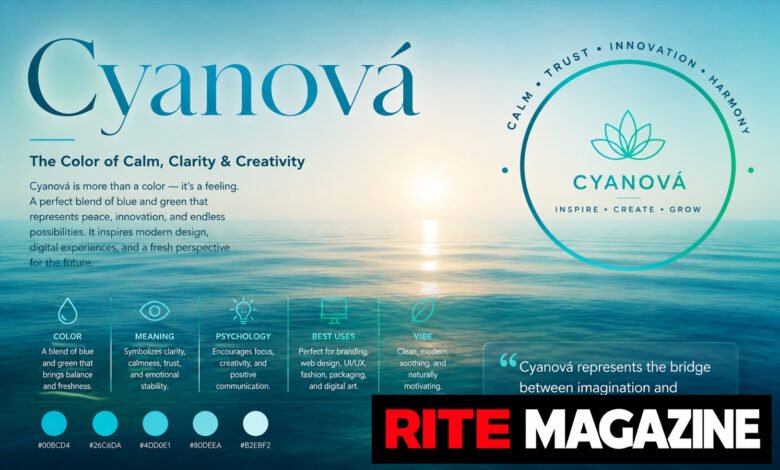
Have you ever come across the word Cyanová while browsing the internet and wondered what it means? You are not alone. More and more people are searching for this word online, and it keeps showing up in design, fashion, branding, and art conversations. So what exactly is Cyanová, and why is it getting so much attention?
What Is Cyanová?
Cyanová is a term that comes from the word “cyan”, which is a color that sits between blue and green on the color spectrum. If you think about the color of a clear ocean or a bright summer sky, you are imagining something very close to cyan.
The word Cyanová has its roots in Slavic languages, especially Czech and Slovak. In these languages, adjectives change their form depending on the gender of the noun they describe. The ending “-ová” is used for feminine nouns. So “cyanová” simply means “cyan-colored” when describing a feminine noun, like “barva” (which means color) or “šaty” (which means dress).
However, in modern online culture and the world of design, Cyanová has grown to mean something bigger. It is no longer just a grammar term. It has become a way to describe a mood, feeling, or visual style connected to blue-green colors.
Where Does the Word “Cyan” Come From?
To understand Cyanová better, it helps to know where “cyan” comes from. The word traces back to the ancient Greek word “kyanos”, which meant “dark blue.” The Greeks used this word to describe things like the deep blue sea and certain blue stones.
Over time, the word made its way into scientific and artistic language. In the world of printing, cyan is one of the four main colors used in the CMYK color model (Cyan, Magenta, Yellow, and Black). This is the system used by printers all over the world. In digital design, cyan is also part of many color systems used on screens.
So when the “-ová” suffix was added in Slavic languages to create Cyanová, it built on centuries of color history and language tradition.
How Cyanová Is Different from Regular Cyan
You might be wondering: if Cyanová comes from cyan, are they the same thing?
Not exactly. There is an important difference between them.
Technical cyan refers to a precise color value. If you are a printer or a digital designer, cyan has a specific measurement. For example, in the RGB color system used on screens, pure cyan is made of 0% red, 100% green, and 100% blue.
Cyanová, on the other hand, is a broader and more emotional idea. It describes not just a color, but also a feeling and an aesthetic. When someone uses the word Cyanová, they may be talking about a calm, refreshing, creative, and modern visual style that uses blue-green tones. It is less about the exact color value and more about the experience and emotion that the color creates.
Think of it this way: cyan is the paint, and Cyanová is the painting.
The History of Cyan-Like Colors in Art and Culture
The colors connected to Cyanová have a long and rich history. Long before the word “cyan” even existed, ancient peoples were using blue-green colors in their art and daily lives.
The ancient Egyptians were known for using cyan-like pigments in their paintings, jewelry, and decorations. For them, these colors represented life, water, and fertility. You can still see these colors in ancient Egyptian art in museums around the world today.
During the Renaissance period in Europe, artists began experimenting more with color. They developed new pigments and techniques, and blue-green tones became popular in paintings.
In the Industrial Revolution, scientists created new synthetic pigments, including colors similar to modern cyan. This made these colors easier to produce and more widely available.
In the 20th century, cyan became especially important in the world of printing and photography. With the rise of color printing and later digital screens, cyan became a standard part of how we produce and view color today.
Why Cyanová Is Trending Online
Now comes the most interesting part. Why is a word like Cyanová suddenly getting popular on the internet?
There are several clear reasons for this trend.
1. The Rise of Digital Design
More of our daily life happens on screens than ever before. We use phones, tablets, computers, and televisions for almost everything. Colors that look beautiful and easy on the eyes on digital displays have become very important. Cyan-based colors like Cyanová look stunning on modern LED and OLED screens because they are bright and fresh without being too harsh.
2. Minimalist and Modern Aesthetics
Today’s design world often prefers clean, simple, and calming visuals. Heavy or very dark colors can feel overwhelming. Cyanová fits perfectly into the modern minimalist style. It brings energy and life to a design without making it feel crowded or loud. Many websites, apps, and brands are now choosing blue-green color palettes for this reason.
3. Connection to Nature
People today care deeply about the environment, nature, and sustainability. Colors like cyan and teal remind us of clean water, clear skies, and fresh air. Using Cyanová in a design or brand can communicate a message of care for the environment and a love of nature. This makes it especially popular with eco-friendly brands and natural lifestyle products.
4. Branding and Identity
Companies are always looking for ways to stand out and seem unique, creative, and trustworthy. The word Cyanová sounds elegant, modern, and a little exotic. Using it in branding gives a product or company a fresh identity. It communicates creativity, intelligence, and a modern attitude.
5. Social Media and Creative Communities
Platforms like Instagram, Pinterest, and TikTok are full of creative people sharing art, fashion, interior design, and aesthetic inspiration. When designers and artists post work that features blue-green tones, the word Cyanová often appears in the descriptions and hashtags. This helps the word spread quickly across online communities.
The Psychology of Cyanová
Colors have a strong effect on how people feel. This is called color psychology, and it is something that designers, marketers, and psychologists take very seriously.
The blue-green tones of Cyanová are generally connected to positive feelings and states of mind:
Calmness and relaxation: Blue tones are widely known for helping people feel calm and peaceful. Cyanová carries this quality and can make a space or design feel more relaxing.
Focus and clarity: The clean, clear nature of cyan-based colors can help people think more clearly and stay focused. This is why many tech companies and educational platforms use blue-green colors in their designs.
Creativity: Green tones are often connected to growth, freshness, and creativity. Cyanová combines this quality with the calmness of blue, creating a color that encourages creative thinking.
Trust and professionalism: Blue is one of the most trusted colors in branding. Cyanová inherits this quality, making it a good choice for brands that want to appear both modern and trustworthy.
How Cyanová Is Used in Different Fields
Cyanová is not limited to just one area. It appears in many different industries and creative fields today.
In Graphic Design and Digital Media
Graphic designers use Cyanová tones to create websites, apps, and digital content that feel fresh, modern, and user-friendly. It is especially popular in technology, health, and wellness-related design.
In Fashion
Fashion designers and stylists use cyan and Cyanová tones in clothing, accessories, and collections. These colors are especially popular in summer collections and in brands that want to communicate a youthful and energetic image.
In Interior Design
Cyanová shades are showing up more and more in home decor. From wall paint to furniture to decorative objects, these blue-green tones bring a sense of calm and modernity to living spaces. They work especially well in bathrooms, bedrooms, and meditation spaces.
In Branding and Marketing
As mentioned earlier, many brands are choosing Cyanová-inspired color palettes to communicate creativity, sustainability, and innovation. This is common in tech startups, wellness brands, and eco-friendly companies.
In Art
Artists around the world are exploring the emotional qualities of Cyanová in their work. Paintings, digital illustrations, and mixed media art that feature these tones often evoke feelings of freedom, flow, and tranquility.
Cyanová in Language: A Small Word with a Big Story
One of the most interesting things about Cyanová is how its popularity shows the way language evolves in our digital world. A word that started as a grammatical form in Czech and Slovak has traveled across the internet and entered conversations in English, design culture, and global branding.
This is a great example of how the internet brings ideas and words from different cultures together. A word does not need to come from English to become popular globally. If it sounds beautiful, feels meaningful, and connects with people emotionally, it can spread quickly.
Cyanová is also a reminder that the words we use to describe colors matter. Instead of just saying “blue-green,” using Cyanová adds a sense of intention and style. It tells people that you care about the details, that you think about aesthetics, and that you are in touch with modern design culture.
The Future of Cyanová
Looking ahead, the popularity of Cyanová is not going away anytime soon. Several trends suggest it will continue to grow.
Digital life is not slowing down, and beautiful screen-friendly colors will always be in demand. Environmental awareness is increasing, making nature-inspired colors even more relevant. The design world is moving toward more emotional and meaningful color choices rather than purely technical ones. And as global communication continues to mix languages and cultures, words like Cyanová will keep finding new audiences.
In short, Cyanová is not just a passing trend. It represents a deeper shift in how people think about color, language, and design.
Concuslion
Cyanová is much more than just a word for a blue-green color. It is a term that carries language history, cultural meaning, emotional depth, and modern design thinking all in one. From the ancient Egyptians who used cyan-like pigments in their art, to today’s digital designers choosing blue-green palettes for apps and websites, the story of Cyanová is long and rich.
Whether you are a designer, a writer, a student, or just someone who is curious about color and language, understanding Cyanová gives you a deeper appreciation for how words, colors, and culture connect with each other.
So the next time you see a beautiful blue-green color that makes you feel calm, creative, and inspired, you know exactly what to call it: Cyanová.
Frequently Asked Questions About Cyanová
1. What does Cyanová mean in simple words?
Cyanová means “cyan-colored” in Czech and Slovak languages. It comes from the word “cyan,” which is a blue-green color, and the feminine suffix “-ová.” In modern usage, it describes a style, mood, or aesthetic connected to blue-green tones.
2. Where does the word Cyanová come from?
The word Cyanová comes from Slavic languages, especially Czech and Slovak. The base word “cyan” originally comes from the ancient Greek word “kyanos,” meaning “dark blue.” The “-ová” ending is a feminine adjective suffix used in these Slavic languages.
3. Is Cyanová a real color or just a word?
Both. As a color, Cyanová refers to blue-green shades similar to cyan, turquoise, and aquamarine. As a word, it carries emotional and aesthetic meanings that go beyond just a specific color value.
For More Amazing Information : Rite Magazine