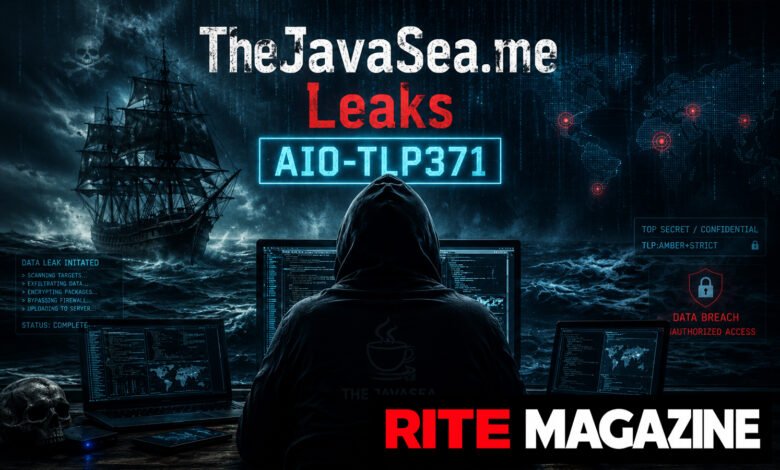
If you have been browsing cybersecurity news lately, you may have come across the name TheJavaSea.me and a data leak called AIO-TLP371. These terms sound technical, but do not worry. This article will explain everything in simple words so anyone can understand what happened, why it matters, and how you can stay safe online.
What Is TheJavaSea.me?
TheJavaSea.me is a website that became known in cybersecurity circles for sharing and leaking data. Websites like this one often operate in gray or illegal areas of the internet. They share databases, user credentials, and other sensitive files that were either stolen or obtained without permission.
This type of website is not new. There are many online platforms that trade or freely share leaked data. Some people use these sites to check if their own information has been exposed. But others use them for harmful purposes, like identity theft or fraud.
TheJavaSea.me became a topic of serious discussion among security researchers because of one specific leak called AIO-TLP371.
What Does AIO-TLP371 Mean?
Let us break this down step by step.
AIO stands for “All In One.” This means the leak contains many different types of data collected from various sources and put together in one large file or package. Think of it like a big box with many different stolen items inside.
TLP stands for “Traffic Light Protocol.” This is a system used in the cybersecurity world to classify how sensitive information is and who should be allowed to see it. There are four levels:
- TLP:RED means the information is very sensitive and should only be shared with specific people.
- TLP:AMBER means it can be shared with a limited group.
- TLP:GREEN means it can be shared within a community.
- TLP:WHITE (or CLEAR) means anyone can see it.
The number 371 likely refers to a version number or a specific batch identifier used by the people who created or distributed the leak.
So, AIO-TLP371 is basically a large collection of mixed leaked data that was shared publicly or semi-publicly through TheJavaSea.me.
What Kind of Data Was Leaked?
According to cybersecurity researchers who studied this leak, the AIO-TLP371 package reportedly contained a wide mix of personal and sensitive information. This may include:
- Usernames and passwords from various websites and apps
- Email addresses connected to online accounts
- Personal identification details such as names, phone numbers, and sometimes addresses
- Financial information in some cases, like partial credit card data or banking details
- Session tokens and cookies, which can allow someone to log into accounts without even needing a password
- API keys, which are used by developers and businesses to connect software systems
This type of combined data leak is especially dangerous because cybercriminals can use the information together to build a complete picture of a person. This is sometimes called “data enrichment” in the hacking world, and it makes scams and fraud much easier to carry out.
Who Is at Risk?
Anyone whose data was included in this leak is at risk. But since this is an “All In One” collection from many different sources, the number of affected people could be very large.
You might be at risk if you have ever:
- Used weak or repeated passwords across different websites
- Signed up for websites or apps that later had a security breach
- Clicked on phishing links or entered your details on fake websites
- Used public Wi-Fi without a VPN to log into personal accounts
Even if you think you are careful online, data from third-party services can still expose your information. For example, if a shopping website you used years ago got hacked, your email and password from that site could now be part of a combined leak like AIO-TLP371.
Why Are These Leaks So Dangerous?
Data leaks like AIO-TLP371 are dangerous for several reasons.
First, the information does not disappear after it is leaked. Once data is on the internet, it stays there. Even if the website is taken down, others can copy and re-share the files.
Second, cybercriminals use this data to carry out credential stuffing attacks. This is when they take a list of usernames and passwords and try them on many different websites automatically. If you use the same password on multiple sites, one leaked password can unlock many of your accounts.
Third, personal information from leaks can be used for phishing. Scammers can craft very convincing fake emails or messages using your real name, address, or account details. This makes it harder for you to spot a scam.
Fourth, stolen session tokens can give hackers immediate access to your accounts without needing your password. This is harder to detect and harder to stop.
What Do Security Experts Say?
Cybersecurity experts have been tracking websites like TheJavaSea.me for a long time. They warn that the growing trend of “All In One” leaks is particularly worrying because it combines data from many different breaches into one easy-to-use package for attackers.
Experts also point out that many users do not know their data has been leaked until serious damage has already been done. This is why checking breach databases and using strong, unique passwords is so important.
Some researchers use tools like Have I Been Pwned (haveibeenpwned.com) to track if email addresses have appeared in known data breaches. If your email appears there, your information may have been exposed.
How to Check If Your Data Was Leaked
Here are some simple steps you can take to find out if your information might be part of a leak like AIO-TLP371:
- Visit haveibeenpwned.com and enter your email address. This free tool will tell you if your email has appeared in any known data breaches.
- Check if your browser has a password manager that flags reused or compromised passwords. Chrome, Firefox, and Safari all have this feature built in.
- Look for unusual activity in your email, bank accounts, or social media. Unexpected login alerts or password reset emails can be a sign that someone is trying to access your accounts.
- Monitor your credit report if you live in a country where this is available. Unexpected loans or credit card applications in your name can signal identity theft.
How to Protect Yourself Online
Even if your data has been exposed, there are things you can do right now to reduce the damage and protect yourself going forward.
Use strong, unique passwords. Every account should have a different password. A password manager like Bitwarden, 1Password, or Dashlane can help you create and store complex passwords safely.
Enable two-factor authentication (2FA). This adds a second step to your login process, like a code sent to your phone. Even if someone has your password, they cannot log in without this second step.
Be careful with emails and messages. If you get an unexpected email asking you to click a link or enter your details, stop and think before you act. Go directly to the website instead of clicking any link.
Update your passwords regularly. If you think you may have been part of a leak, change your passwords right away, starting with your most important accounts like email and banking.
Use a VPN on public networks. A Virtual Private Network (VPN) encrypts your internet connection and makes it harder for others to steal your data when you are using public Wi-Fi.
Keep your software updated. Updates often include security fixes that protect your device from known vulnerabilities. Do not ignore those update notifications.
What Authorities and Platforms Are Doing
Law enforcement agencies around the world are working to shut down websites that distribute stolen data. Many of these sites are hosted in countries where internet laws are less strict, which makes it harder to take action. However, international cooperation between cybersecurity agencies is improving.
At the same time, major tech companies and platforms are investing more in detecting and responding to credential stuffing attacks. Some platforms now alert users when their login credentials are found in known breaches and force a password reset.
But the responsibility does not fall only on companies and governments. Users also play a big role in keeping their own information safe.
Concuslion
TheJavaSea.me and the AIO-TLP371 leak are a reminder that data breaches are a real and ongoing threat. Your personal information has value, and unfortunately there are people who want to use it for their own gain.
The good news is that you do not have to be a cybersecurity expert to protect yourself. Simple habits like using unique passwords, turning on two-factor authentication, and checking your accounts regularly can make a big difference.
Stay informed, stay careful, and take your online security seriously. It is one of the most important things you can do in today’s digital world.
Frequently Asked Questions (FAQs)
Q1: Is TheJavaSea.me a legal website?
No, websites like TheJavaSea.me that share stolen or leaked personal data are generally considered illegal. They violate data protection laws in many countries and can be used to facilitate crimes like identity theft, fraud, and account takeover. Visiting or using such websites can also put you at legal and security risk.
Q2: What should I do if my data was part of the AIO-TLP371 leak?
Start by changing your passwords immediately, especially for important accounts like email and banking. Enable two-factor authentication wherever possible. Check haveibeenpwned.com to see if your email address has been found in known breaches. Also, keep a close eye on your bank statements and credit report for any unusual activity.
Q3: Can I get my data removed from these leaked databases?
Unfortunately, once data has been shared online, it is very hard to remove it completely. Files can be copied and re-shared many times across different platforms. The best approach is not to try to remove the data after the fact, but to limit the damage by changing your passwords, securing your accounts, and being extra careful about phishing attempts going forward.
For More Amazing Information : Rite Magazine